





News & Stories
2022
News
HKUST Co-led Study Reveals Topology at the Corner of the Dining Table
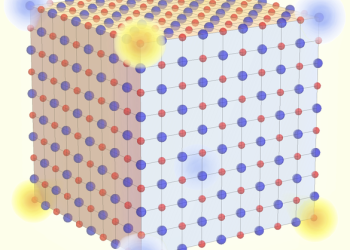
A joint research team from the Hong Kong University of Science and Technology (HKUST) and the University of Tokyo discovered an unusual topological aspect of sodium chloride, commonly known as table salt, which will not only facilitate the understanding of the mechanism behind salt’s dissolution and formation, but may also pave the way for the future design of nanoscale conducting quantum wires.
There is a whole variety of advanced materials in our daily life, many gadgets and technology are created through the assembly of different materials. Cellphone, for example, adopted a combination of many different substances — glass for the monitor, aluminum alloy for the frame, and metals like gold, silver and copper for its internal wirings. But nature has its own genius way of ‘cooking’ different properties into one wonder material, or what is known as ‘topological material’.
News
HKUST researchers find new way of gaining quantum control from loss
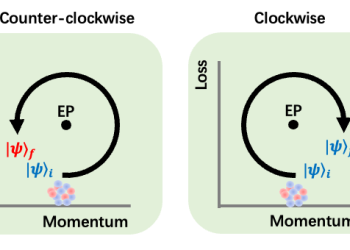
Researchers at the Hong Kong University of Science and Technology (HKUST) have demonstrated a new way to control the quantum state through the loss of particles – a process that is usually avoided in the quantum device, offering a new way towards the realization of unprecedented quantum states.Manipulating a quantum system requires a subtle control of quantum state with zero imperfect operations, otherwise the useful information encoded in the quantum states is scrambled. One of the most common detrimental processes is the loss of particles that consist of the system. This issue has long been seen as an enemy of quantum control and was avoided through the isolation of the system. But now, researchers at the HKUST have discovered a way that could gain quantum control from loss in an atomic quantum system.The finding was published today in Nature Physics.
2021
News
PPOL holds Asia-Pacific Conference on Innovation and Entrepreneurship Ecosystems
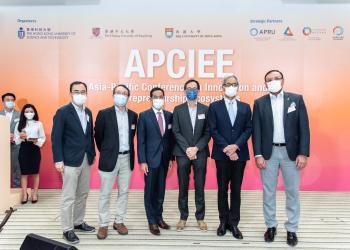
The Association of Pacific Rim Universities (APRU) and the Division of Public Policy (PPOL) at the Hong Kong University of Science and Technology (HKUST) hosted the Asia-Pacific Conference on Innovation and Entrepreneurship Ecosystems (APCIEE) on 6-7 December 2021. The conference invited 31 experts from all over the world to share their experiences in the creation of successful innovation hubs with over 180 attendees (in-person and online), which helps cultivate an innovation network of Hong Kong with aligned interests.
News
Research jointly led by HKUST and HKBU Unlock Biogeographical Secrets of Deep-sea Limpets
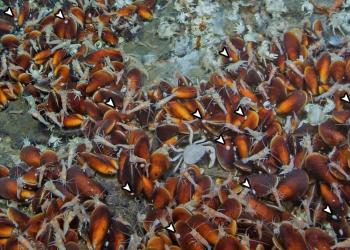
Researchers from The Hong Kong University of Science and Technology (HKUST) and Hong Kong Baptist University (HKBU) have decoded for the first time the demographic history, genetic structure, and population connectivity of a deep-sea limpet widely distributed in vent and seep ecosystems in the Northwest Pacific. This study not only enhances our knowledge of the historical population divergence and contemporary gene flow of deep-sea organisms under the intricate interactions amongst local habitats, seafloor topography, and ocean currents, but also serves as a scientific basis for better conservation of marine biodiversity and more effective environmental management.
News
Personalized Real-time Air Quality Informatics System for Exposure – Hong Kong (PRAISE-HK)
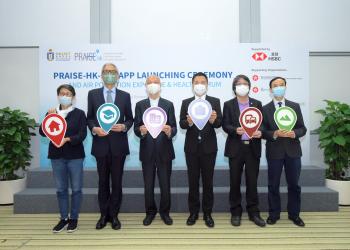
HKUST Institute for the Environment (HKUST-IENV) today released the “PRAISE-HK-EXP App” – a new mobile app that help users analyze their personal air pollution exposure budget, from outdoor, indoor, to different micro-environments including various modes of transportation, so that they can better manage their exposure to air pollution in different micro-environments. Thanks for the HSBC 150th Anniversary Charity Program, the PRAISE-HK system has three major release milestones for the mobile app: