






HKUST Leads International "Hong Kong Operation Robot" Project
Contributing to National Chang'E-8 Lunar Exploration and Advancing Hong Kong's Aerospace Science and Technology

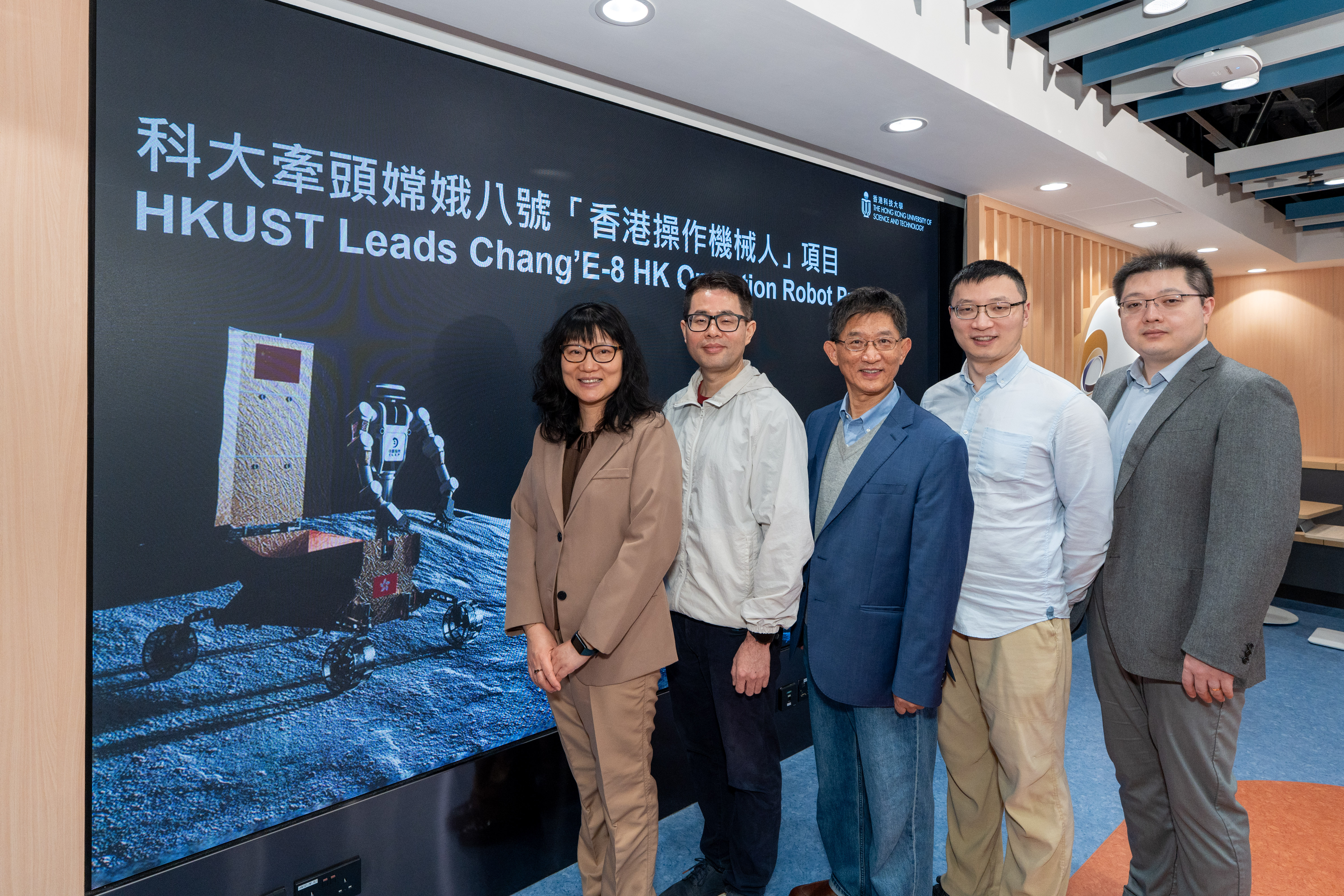
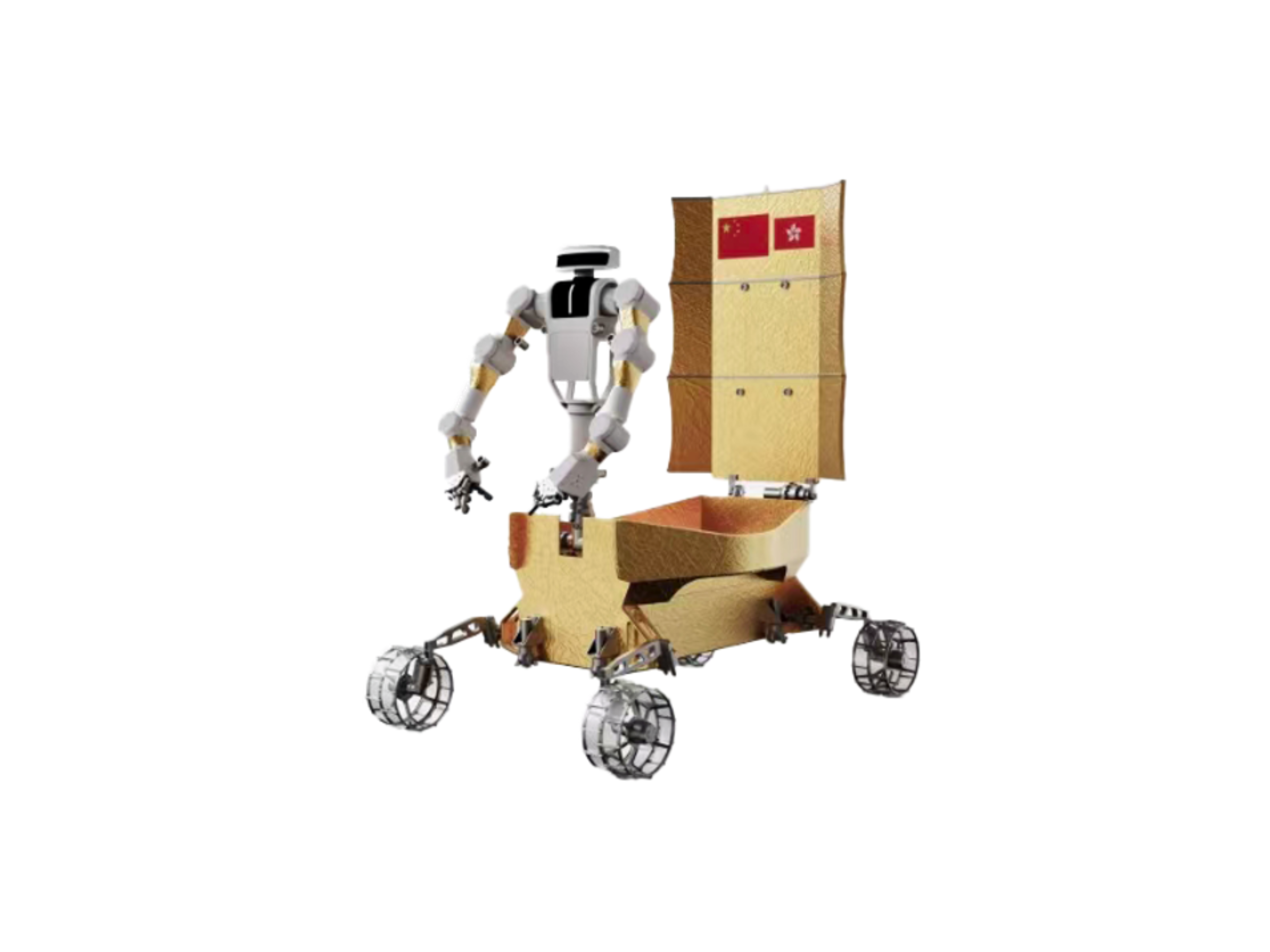
The Hong Kong University of Science and Technology (HKUST) has been appointed by the China National Space Administration (CNSA) to lead the international "Hong Kong Operation Robot" project for the Chang'E-8 mission. The project will unite global aerospace scholars and experts to develop a multi-functional lunar surface operation robot. Equipped with a mobile charging station and capable of dexterous operations, the robot is designed to make significant contributions to the nation's lunar exploration missions.
To support this international endeavor, the HKSAR Government has established the Hong Kong Space Robotics and Energy Center (HKSREC) under the InnoHK research clusters. HKSREC will spearhead the project, fostering cross-institutional and cross-regional collaboration. Under the leadership of HKUST, the "Hong Kong Operation Robot" will be developed in partnership with academic and research institutions in Hong Kong, the Chinese Mainland, and overseas. This initiative aims to drive cutting-edge innovation across the entire aerospace technology lifecycle—from conceptualization, research and development, and production to testing, and system integration.
As part of the fourth phase of China's lunar exploration program, the Chang'E-8 probe is scheduled for launch around 2029. Its mission is to advance the establishment of the future International Lunar Research Station. The spacecraft will land at the lunar south pole with a suite of international surface robots, including the "Hong Kong Operation Robot", to conduct scientific research. This robot, designed by HKUST's interdisciplinary teams, will play a critical role in operating within the Moon's extreme environment, demonstrating unprecedented performance, precision, and capabilities.
HKUST Vice-President for Research and Development Prof. Tim CHENG Kwang-Ting remarked, "China's aerospace sector is advancing with extraordinary momentum and has achieved globally recognized milestones in deep space exploration. Capitalizing on its unique position of being 'backed by the motherland and connected to the world,' along with its robust scientific research capabilities, Hong Kong is actively advancing the development of aerospace science and technology and bolstering the space economy. Through participation in the Chang'E-8 mission through HKSREC and the project 'Monitoring Greenhouse Gas Emission Point Sources from the China Space Station,' funded under the Innovation and Technology Support Program Special Call on Aerospace Technology, HKUST is contributing to the international growth of China's aerospace program. By leveraging its research strengths in areas such as AI, robotics, materials science, and thermal engineering, HKUST is facilitating the translation and practical application of aerospace research outcomes. These efforts will not only elevate Hong Kong's global competitiveness in aerospace technology but also strengthen its role as an international hub for innovation and technology, while generating meaningful economic impact."
The project is led by Prof. GAO Yang, an internationally renowned expert in space robotics, Director of the Hong Kong Space Robotics and Energy Centre (HKSREC), Director of the HKUST Centre for AI Robotics in Space Sustainability (CAIRSS), Co-Director of the Space Science and Technology Institute, and Professor in the Department of Mechanical and Aerospace Engineering. Prof. Gao is designing the robot's "operational brain." Equipped with dual robotic arms—a global first in deep space exploration—the robot will be capable of deploying and installing instruments, collecting lunar surface samples, and more.
After the Chang'E-8 probe lands, the robot will transport other instruments or sensors to their designated locations. The Moon's South Pole presents a unique and challenging landscape, characterized by rugged terrain, impact craters of varying sizes and drastic elevation changes. Deep craters freeze in billion-year-old shade, while mountain ridges are bathed in perpetual sunlight. The robot must be capable of real-time perception of the lunar terrain, autonomous path planning and optimization, and operation under extreme temperature fluctuations without satellite navigation support. These conditions pose significant design challenges.
To address them, HKUST's research team is developing an AI-powered operational framework that enables the robot to function safely throughout the mission. This software-defined architecture integrates machine learning with ground stations and the robot itself, dynamically adjusting autonomy levels based on real-time conditions to achieve unprecedented situational awareness and adaptability. Whether through Earth-based AI-enhanced remote vision processing or fully autonomous onboard 3D mapping and visual-inertial navigation, the robot maintains an optimal balance between efficiency, speed, and unwavering safety.
Prof. Gao remarked, "We are deeply grateful to the HKSAR Government for the support of our InnoHK Centre, and I am honored to lead this national mission with outstanding teams from Hong Kong, the Chinese Mainland, and overseas through HKUST and HKSREC. This reflects HKUST's recognized strengths in research and international project coordination, as well as our commitment to advancing the nation's aerospace endeavors. The HKSREC will build Hong Kong's foundational capabilities in aerospace technology while cultivating high-caliber talent. As an interdisciplinary field, aerospace technology will enable the HKSREC to not only elevate Hong Kong's expertise in aerospace research and engineering but also generate significant impact across industries such as AI, robotics, computer science, microelectronics, and communications."
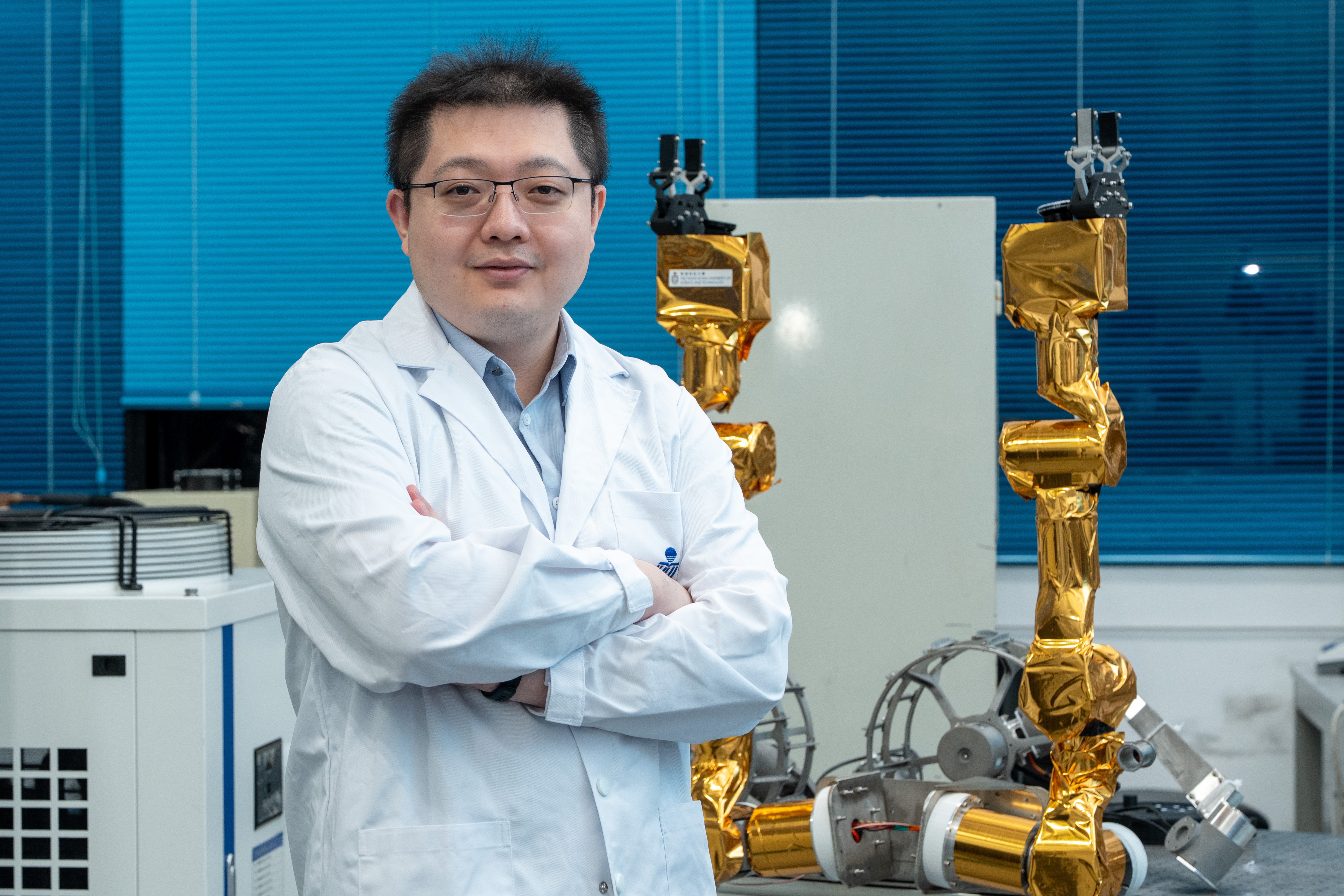
Prof. DUAN Molong, a robotics control expert and core member of the HKSREC, is responsible for developing the robot's manipulation systems. He also serves as Associate Director of Center for Smart Manufacturing and Assistant Professor of the Department of Mechanical and Aerospace Engineering at HKUST. He outlined the project’s primary challenges: "The lunar environment—characterized by extreme temperature, radiation, pervasive dust, and computational and power limitations—presents significant challenges to traditional manipulation techniques." His team's dual-arm robotic system will enable precise sample acquisition and payload deployment, transforming the robot into a mobile manipulation and service platform poised to contribute to lunar science and infrastructure development.
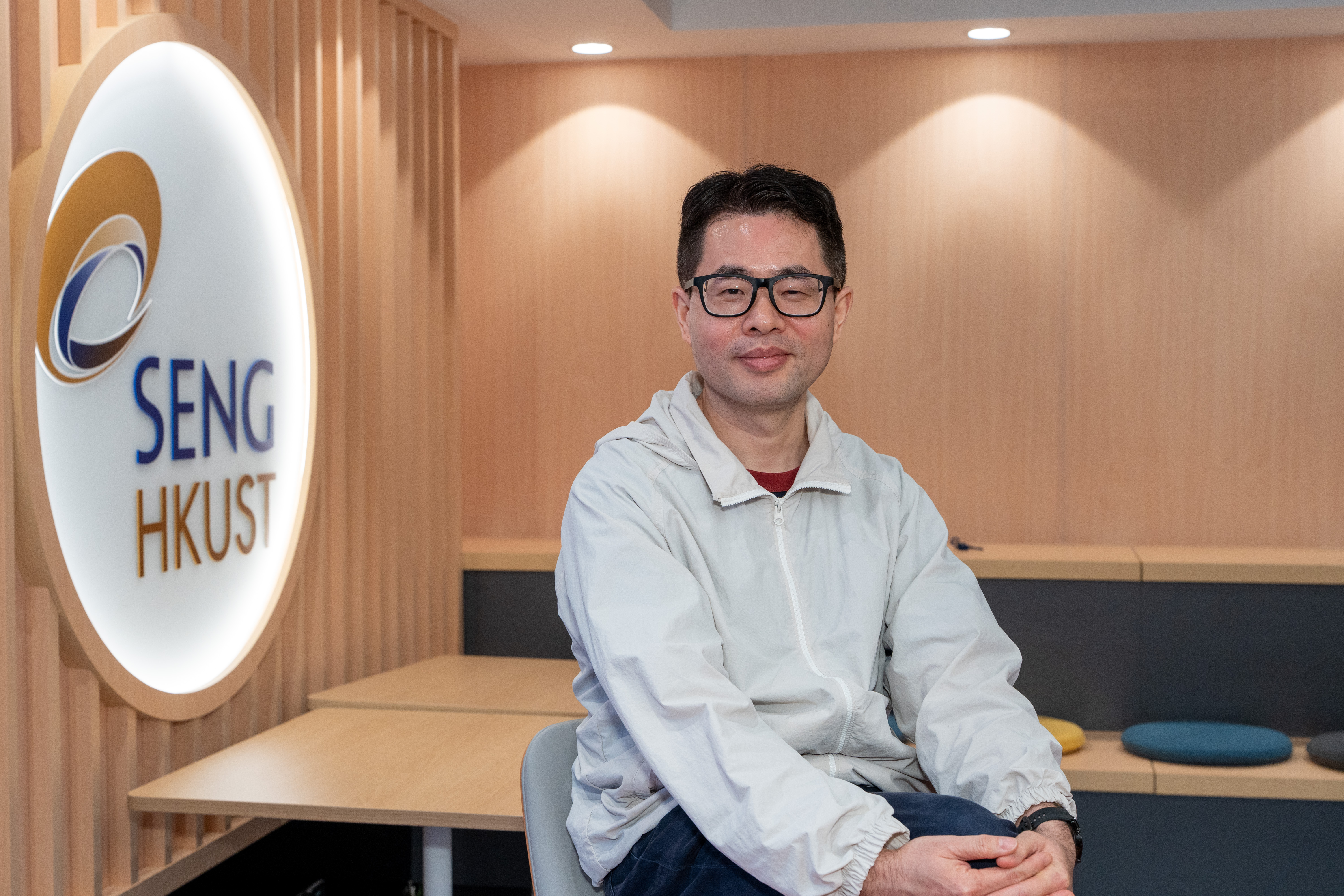
Prof. SHI Ling, an expert in robot path planning and a core member of the HKSREC, emphasized the critical need for seamless integration between the robot's mobility and control systems. He holds joint appointments as Associate Director of HKUST-DJI Joint Innovation Laboratory and the Space Science and Technology Institute and is a Professor in both the Department of Electronic and Computer Engineering and the Department of Chemical and Biological Engineering at HKUST. "True autonomous operation requires intelligent, task-oriented decision-making under strict constraints," he stated. His team is developing a hierarchical planning system to optimize task prioritization and path efficiency, enabling the robot to adapt to unforeseen obstacles and respond to emerging scientific needs in real-time, thereby maximizing operational efficiency during each lunar day.
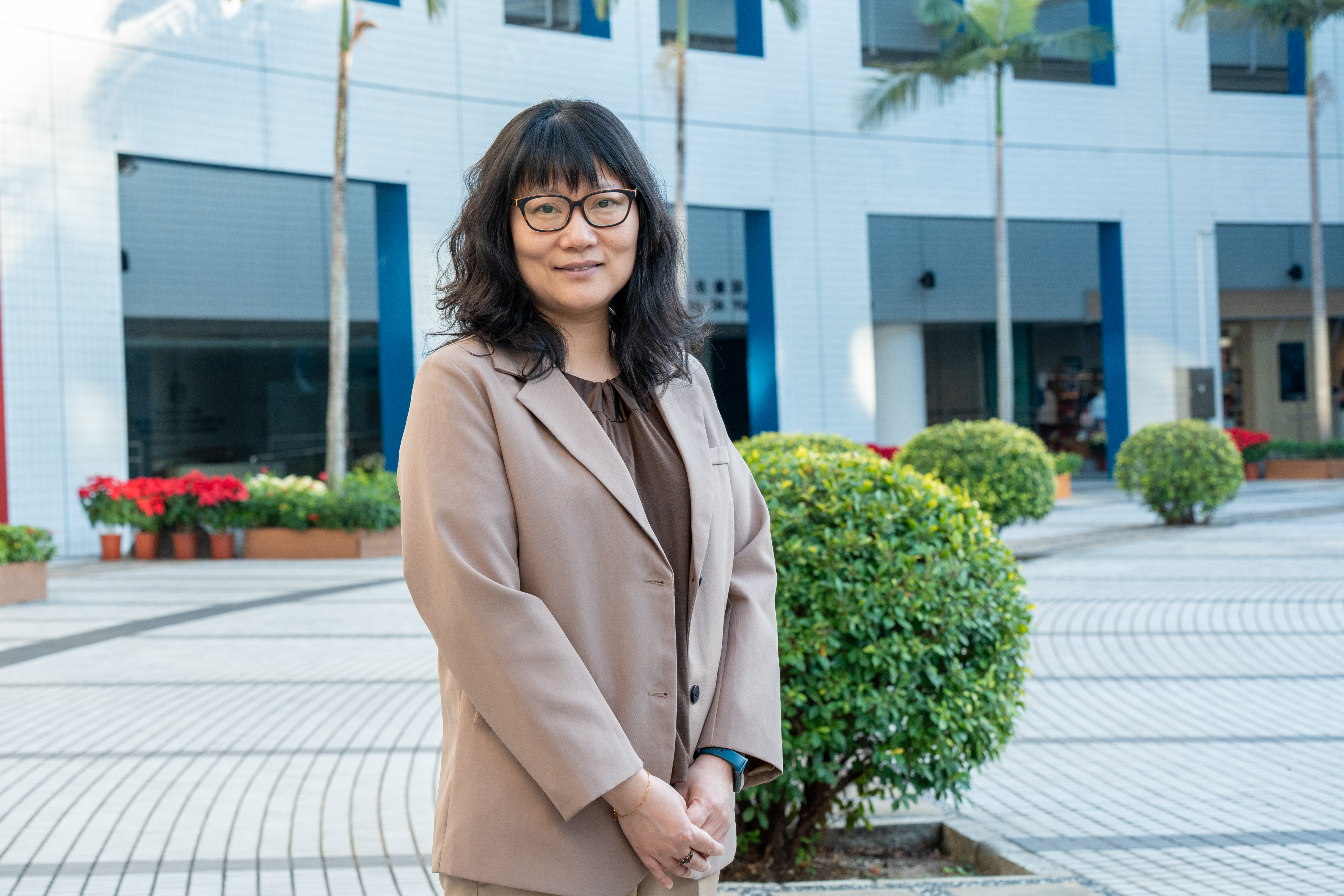
Addressing the Moon's extreme temperature fluctuations—which swing from +120°C to -180°C—is Prof. Walter WANG Zhe, a thermal control system expert and a core member of the HKSREC. He also serves as Associate Director of the GREAT Smart Cities Institute and Associate Professor of the Department of Civil and Environmental Engineering at HKUST. "My team is developing a sophisticated thermal management system using advanced materials and controlled fluid loops to maintain the robot's core components within a safe operating temperature range throughout the lunar day and night," he said.
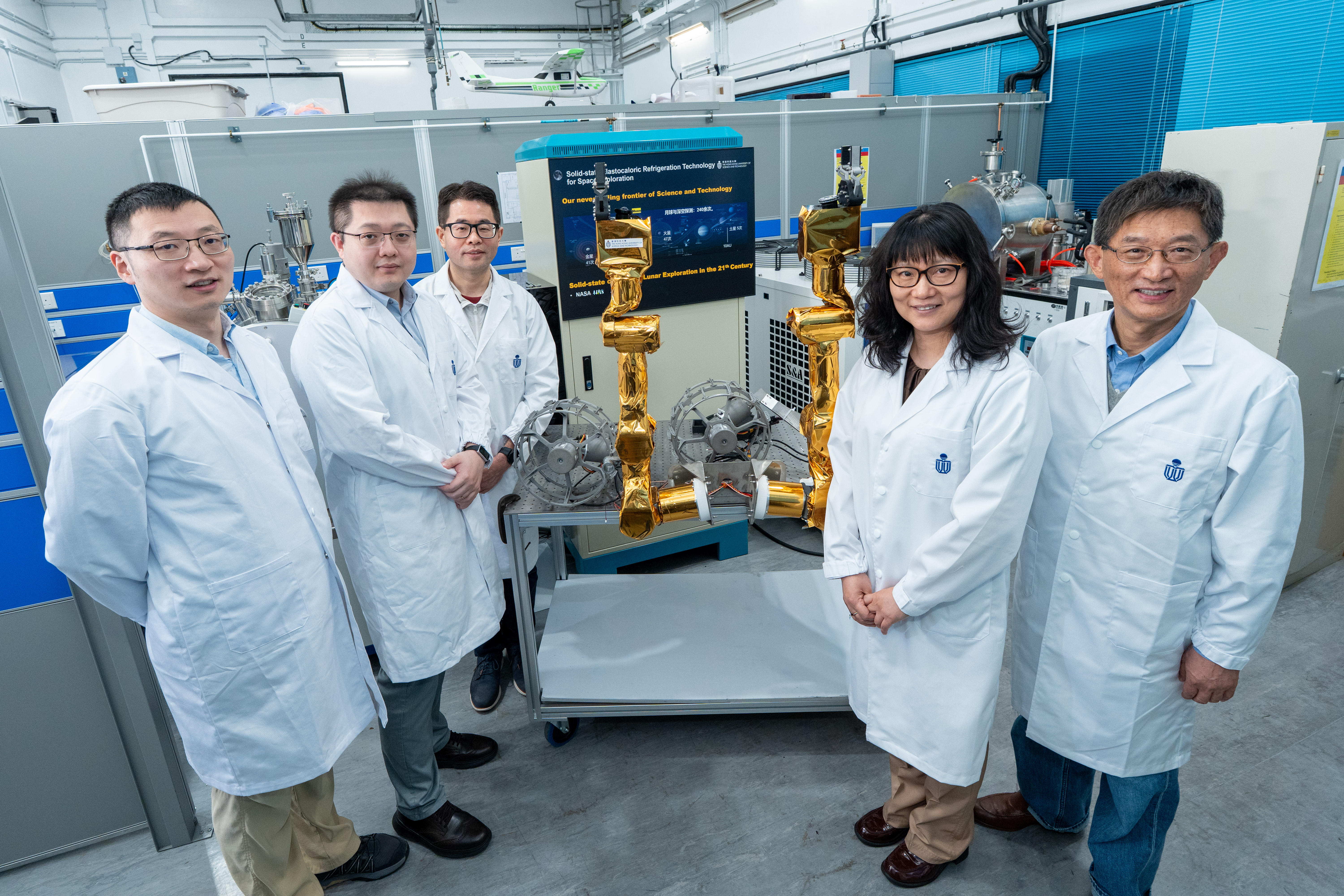
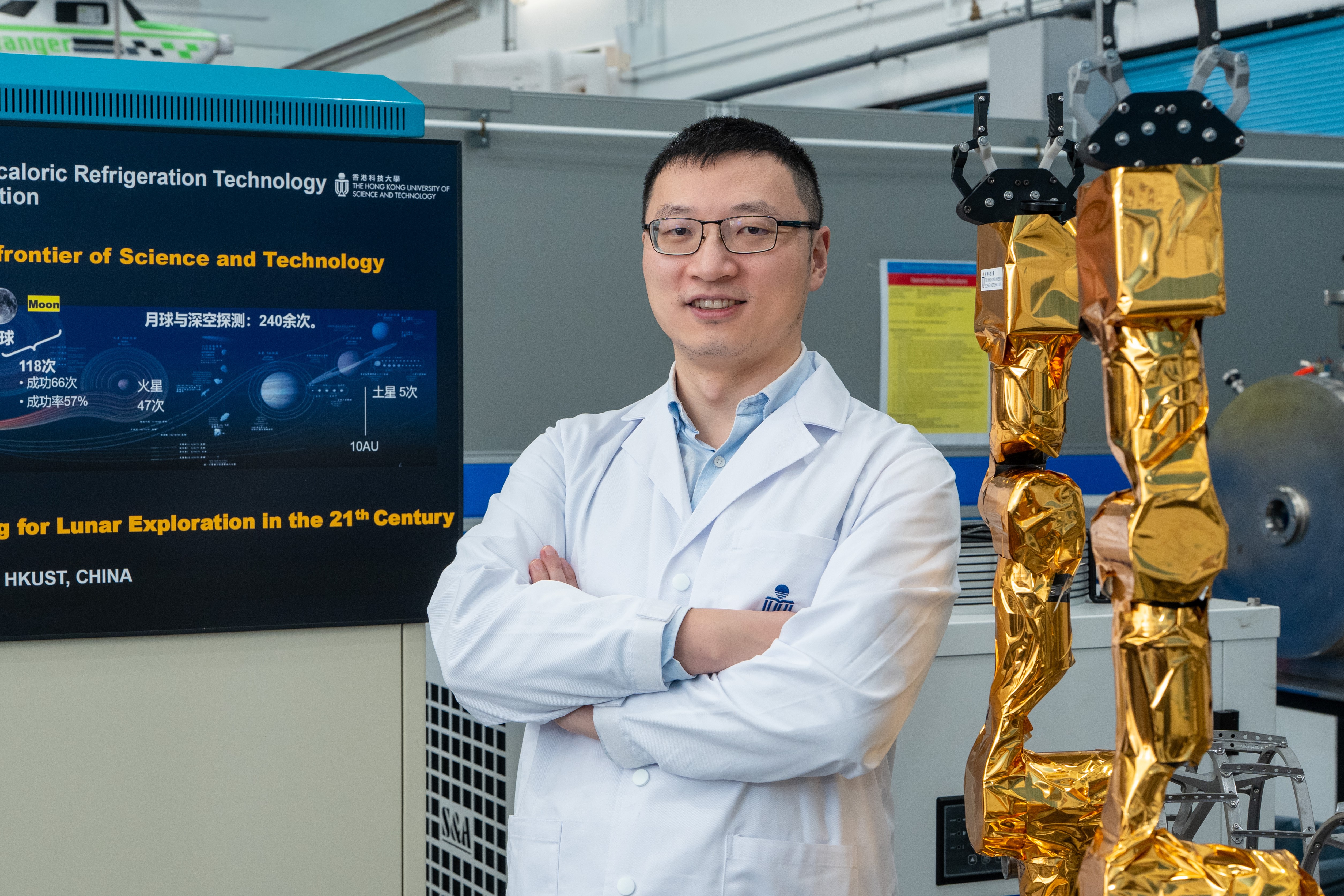
Prof. SUN Qingping, Chair Professor of the Department of Mechanical and Aerospace Engineering at HKUST, is contributing an innovative experimental payload to validate next-generation thermal management technologies in the space environment. "Testing new materials and cooling strategies in the actual lunar environment is crucial for future, extended lunar missions," he explained. These experiments will provide critical data for developing thermal control systems for future lunar and deep space exploration.
The Hong Kong Operation Robot represents a significant leap forward in lunar exploration technology and underscores HKUST's world-class research capabilities. The HKUST-led collaborative effort, involving over 100 interdisciplinary researchers from around the world, is poised to solidify Hong Kong's pivotal role in the nation's aerospace missions. It showcases the powerful convergence of intelligent operation, precision control, adaptive planning, and resilient engineering, pushing the boundaries of human exploration on the Moon.
About The Hong Kong University of Science and Technology
The Hong Kong University of Science and Technology (HKUST) (https://hkust.edu.hk/) is a world-class university known for its innovative education, research excellence, and impactful knowledge transfer. With a holistic and interdisciplinary pedagogy approach, HKUST was ranked 6th in the QS Asia University Rankings 2026, 3rd in the Times Higher Education’s Young University Rankings 2024, and 19th globally and 1st in Hong Kong in the Times Higher Education’s Impact Rankings 2025. Thirteen HKUST subjects were ranked among the world’s top 50 in the QS World University Rankings by Subject 2025, with “Data Science and Artificial Intelligence” coming in 17th worldwide and first in Hong Kong. Our graduates are highly competitive, consistently ranking among the world’s top 30 most sought-after employees. In terms of research and entrepreneurship, over 80% of our work was rated “internationally excellent” or “world leading” in the Research Assessment Exercise 2020 of the Hong Kong’s University Grants Committee. As of July 2025, HKUST members have founded over 1,900 active start-ups, including 10 Unicorns and 17 exits (IPO or M&A).
For media enquiries, please contact:
PR and Media Team, Global Engagement and Communication Office
Email: media@ust.hk
Sign Up for Our Latest News
Latest News

The Hong Kong University of Science and Technology (HKUST) Jockey Club Institute for Advanced Study will host a Nobel Symposium on February 6, 2026 (Friday), featuring three Nobel Laureates in Physics, along with Prof. Paul C. W. CHU, HKUST President Emeritus and University Professor Emeritus, who is a physicist pioneering in high-temperature superconductivity.
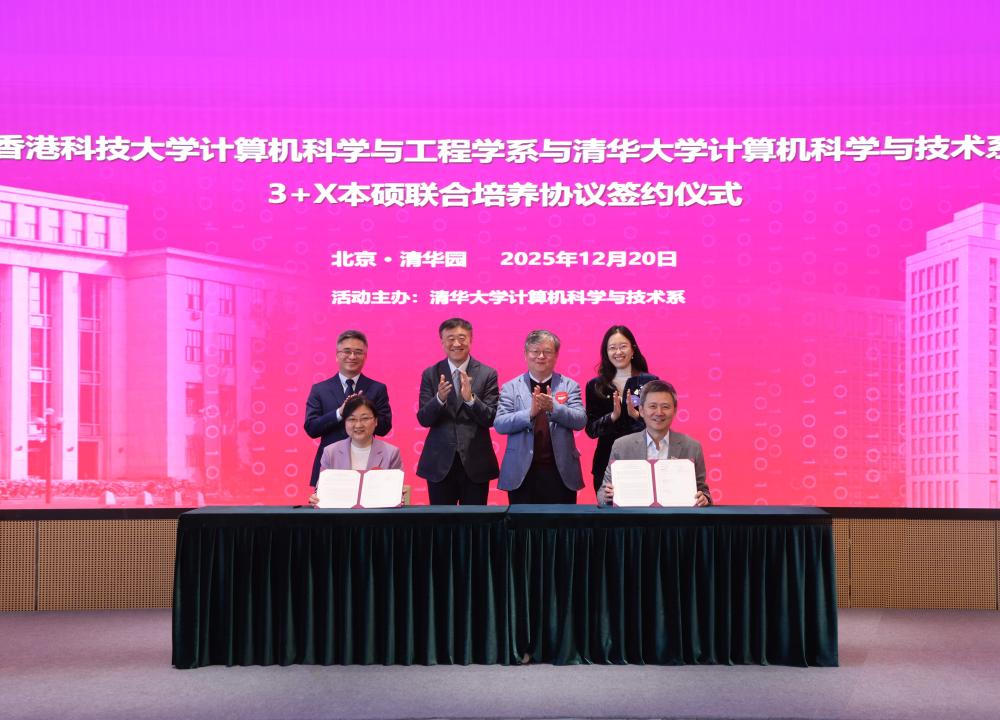
The Department of Computer Science and Engineering (CSE) at The Hong Kong University of Science and Technology (HKUST) and the Department of Computer Science and Technology at Tsinghua University (Tsinghua) announced the launch of a pioneering "3+1+X" Joint Undergraduate – Postgraduate Training Program, set to begin in the 2026/27 academic year.

16 teams from HKUST showcased their innovative prowess at the Hong Kong Techathon 2026, jointly organized by HKSTP and 15 leading universities and institutions in Hong Kong. Remarkably, these teams secured 17 out of 46 awards, including the Best Presentation Award, three Gold Awards, five Silver Awards, four Bronze Awards, and four Merit Awards.